


When we hear a big, weighty word like “philanthropy,” it often seems to us that this is something we associate with the ultra-wealthy. We imagine people who live somewhere far away and, once a year, write big checks at charity galas. But in reality, these days everything has changed, and if you’ve ever googled “what is philanthropy,” you probably just want to understand how you can make this world a little kinder and brighter with your own efforts.
Philanthropy isn’t just a textbook term anymore, because it is a story about each of us, about our common desire to do more than just get through the day, but to leave something good behind. It’s for everyone: the owner of a small coffee shop, the director of a huge factory, and an ordinary student, so let’s understand in simple language, without complex terms, what it is and why it is so important for all of us.
Table of Contents
What Philanthropy Means
The word comes from Ancient Greek and literally means “love of people.” But in our ordinary life, it is something much more than just dropping spare change into a cup, because here we are talking about a sincere desire not just to help a person survive this day, but to change their life so they’re less likely to end up in the same situation again.
A lot of people still confuse these things and don’t quite understand the difference between charity and donation, so let me explain it with the simplest example: charity is when you see a hungry person and give them a fish to eat right now. And philanthropy is when you give them a fishing rod, teach them how to fish, and show them where the fish bite best, so that they can feed themselves for the rest of their life and never go hungry again.
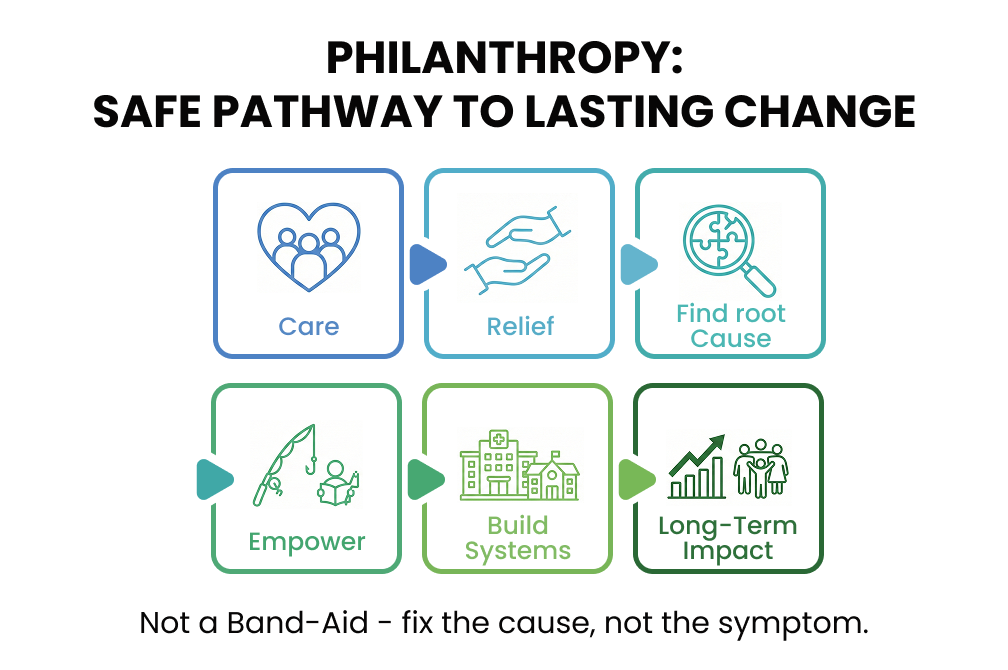
Here is a simple definition of philanthropy that puts everything in perspective: it is when you spend your time or money not just to put a Band-Aid on a problem, but to address the root cause. When we ask what philanthropy means for a modern person, the answer is very simple – it is caring and understanding that we’re all part of the same community, and if a neighbor is in trouble, then this applies to us too.
People often ask what philanthropy means in ordinary everyday life, and here it all comes down to a simple habit of thinking ahead, because it is much better to help build a good hospital once than to spend a lifetime buying medicines that treat symptoms instead of the cause.
What Philanthropic Giving Looks Like Today
Of course, money is important, and it is difficult to do anything without it, but when we talk about what is philanthropic giving, it is no longer just about sending money to a charity.
Modern philanthropy is about sharing resources where they can make real change, and it can be anything:
- Goods and supplies. Imagine that a company has good but unnecessary furniture or clothes in its warehouse, and instead of just dumping them, they give them to schools, daycares, or shelters. This is incredibly beneficial for nature because understanding what recycling is and how to use things properly helps turn what could have become trash into a real gift and help for someone else.
- Technology. Giving older but fully functional computers to children in a rural school so that they can learn and explore the world is also true philanthropy.
- Knowledge. When a skilled professional teaches someone a profession for free, they give a person a chance to find a job and start a new life.
Philanthropy can be a bridge between surplus and need that takes where there is excess and transfers it to where it is sorely lacking, and absolutely everyone benefits from such a simple exchange, and the world becomes a little fairer.
What is Philanthropic Work
It happens that your skills and experience are worth much more than any money. The question what is philanthropic work is about your personal participation when you decide to spend your time and work for free for some good and great cause.
Imagine a lawyer who, on their day off, just helps an elderly woman with paperwork, or a truck driver who delivers humanitarian aid to people hit by a disaster. This is the same philanthropy in action that you can’t buy for any money.
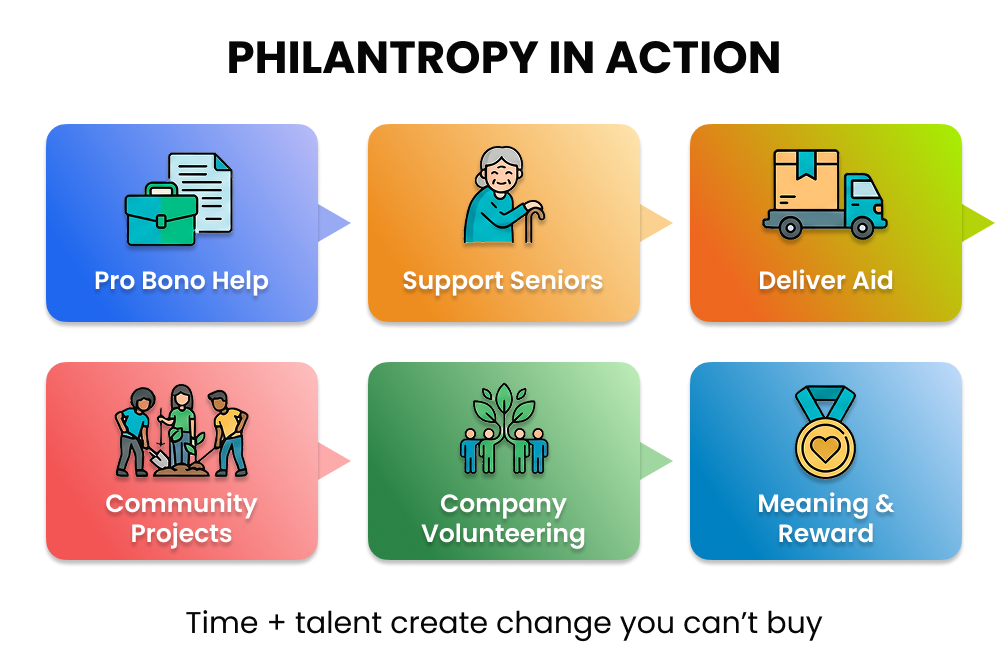
For businesses, this has become the norm, and many companies are implementing ESG solutions, where social assistance is the volunteerism of their employees. When colleagues go out together to plant trees in the park or paint a fence at a daycare, it unites the team better than any holiday, because you all feel that you are doing something real and necessary.
When philanthropy becomes a part of your life, you begin to understand that you are investing your talent and time in the changes that will remain after you, and it feels deeply rewarding.
A Brief History of Philanthropy in the US
To understand where we are today, it helps to remember where it all began, because American philanthropy has long been shaped by the idea that if you have become successful and have more than others, you should share and help.
It all started a long time ago, with Benjamin Franklin, who helped establish public libraries so that books and knowledge would be available to all people, not just the rich. Then there were such famous people as Andrew Carnegie, who said that dying rich without giving away money to good causes is a shame, and he built universities and museums, making philanthropy a systemic thing for centuries. Today, that tradition continues with Bill Gates and Warren Buffett, who are spending billions of dollars to fight terrible diseases and tackle climate change.
History shows us that philanthropy has always come to the rescue precisely where government couldn’t respond quickly enough or could not cope, and it has become an important part of our culture. You do not have to be a millionaire to be called a philanthropist, because today everyone who helps constantly, sincerely, and from the heart is helping shape a culture of giving.
Philanthropy is exactly what makes us human. It is our ability to stop, look around, and think: what can I do today so that tomorrow we all live a little better? Even your smallest good deed is of great importance for the whole world.
FAQ
What are The Five Pillars of Philanthropy?
They’re easy to remember as the Five T’s: Time (your Time that you give), Talent (your Talent and ability to do something useful), Treasure (money or material resources), Ties (your Connections and acquaintances that help), and Testimony (your voice and advocacy).
Can Anyone Become a Philanthropist?
Yes, of course, and this is absolutely true! The myth that philanthropy is a closed club only for the rich is a thing of the past. If you help your neighbors, volunteer, or give things to those who need them most, you are a true philanthropist, because what matters most is consistency and intent, not the amount.
Who are Some of the Most Prominent Philanthropists in America Today?
Such famous people as Warren Buffett and Bill Gates, who do incredible things, still remain at the top of the list. But a very large and important influence is Mackenzie Scott, who is known for giving away huge sums of money to foundations very quickly, simply, and without unnecessary words, trusting them to decide for themselves how best to use this money for good.
What Skills Does a Philanthropist Need?
This, of course, requires a good heart, but you also need clear thinking. The main thing is empathy to feel someone else’s pain as your own, and a strategy to understand how to solve the problem so the problem is reduced long-term, and not just temporarily forget about it.