


Companies from huge logistics warehouses to cozy coworking spaces can no longer afford to simply discard outdated assets. Rising raw material prices and strict environmental standards are forcing managers to look for smarter ways to handle surplus items.

Of course, we all know what recycling is and how this process helps the planet. But today, a slightly different approach is gaining attention. Therefore, the choice between upcycling and recycling becomes important when planning workspace upgrade budgets.
Table of Contents
Understanding What Is the Difference Between Recycling and Upcycling
To make the right decision for your company, you need to clearly understand what is the difference between recycling and upcycling on a practical level. Traditional recycling usually involves breaking materials down into raw components. The collected materials are crushed, melted, or chemically broken down to create raw materials for new products.
Often, this complex process leads to a loss of the original strength of the material. If you want to explore this further, you can read more in our article on downcycling, which describes in detail the mechanisms of reducing the quality of secondary raw materials.
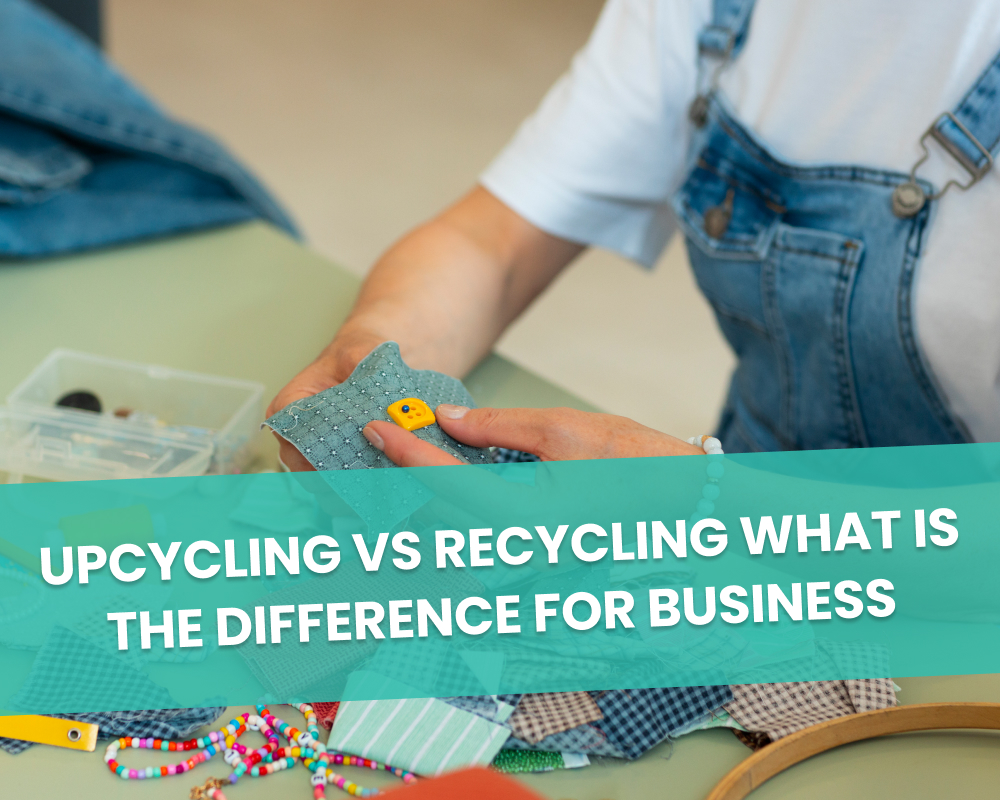
On the other hand, upcycling works in a completely different way. You take an old item and give it a new purpose or higher value without destroying the structure. To better understand this philosophy, you should read the article about what is upcycling and look at the impressive results of this approach.
The main difference is that upcycling keeps much of the original form and uses less energy. Recycling often requires transportation, industrial facilities, and significant energy use, while upcycling often requires creativity and only a few tools.
Upcycling vs Recycling for Offices and Warehouses
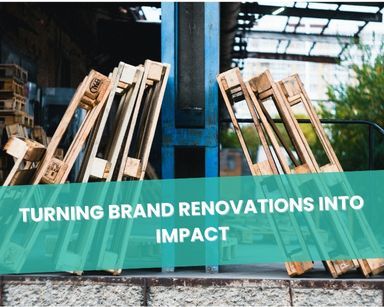
When deciding between recycling and upcycling, it is always worth considering upcycling as the first option to consider. For warehouses and large offices, this can lead to immediate cost savings. Instead of purchasing new furniture for the staff recreation area, you can repurpose old wooden pallets or metal shelving. This approach also works well in everyday settings when an ordinary old door in your home can be turned into a vintage-style dining table.
However, big business has its own scale. If, after the repair, you are left with hundreds of broken chairs or completely burned-out equipment, upcycling is no longer practical. In such situations, commercial recycling is often the most practical solution. For example, systematic office furniture recycling allows you to quickly free up huge areas from real waste by transferring it to proper recycling.
Examples of Recycling and Upcycling in Action
These ideas are easiest to understand through real business examples from the life of modern enterprises.

Here are some popular options for creative reuse of materials:
- Transforming old metal barrels from a logistics hub into stylish high tables for an office cafe.
- Using durable advertising banners from past marketing campaigns to sew practical branded bags for couriers.
- Creating comfortable sofas from used construction pallets.
- And here are common examples of traditional recycling:
- Collecting tons of scrap office paper and cardboard to make new packaging materials.
- Melting bent metal warehouse structures into new construction reinforcement.
A good example is how recycling and upcycling can work side by side within the same company. Imagine a large distribution center where employees turn intact wooden crates into street benches and smashed pallets are sent for industrial recycling. This is smart junk removal management that leaves no chance for garbage to end up in a city landfill.
Is Upcycling Zero Waste?
Many business owners who want to make their operations as sustainable as possible often ask: Is upcycling zero waste? The answer is: almost. It is one of the most resource-efficient approaches available today. In many cases, it reduces the need for transport and energy-intensive processing, avoids energy-intensive industrial processing, and does not pollute the air with industrial emissions.
To transform an old item, you will only need a few new screws or a little eco-friendly water-based paint. Compared to large-scale factory processing methods, these costs are minimal. That is why forward-thinking companies are choosing upcycling as part of their internal culture.