Top 10 Sustainable Supply Chain Companies 2026
Jessica Gonzalez
Global Chief Executive | Founder Happen Ventures
It’s 2026, and many traditional management approaches no longer hold up. Supply chains, which were once just a technical stage of delivering goods from the factory to the shelf, have now become a complex system that keeps the global economy moving, and their impact on the planet is impossible to ignore. We are watching companies transform before our eyes, because if before environmental friendliness was just a nice bonus for marketing reports, now it is a matter of survival in the market. The foundation on which the most successful brands of the future are built is a sustainable supply chain, and this is no longer a trend, but our new reality.
Let’s take a look at those who do not just declare values, but really change the rules of the game with their actions. We’ve put together an overview of industry leaders, where innovation and accountability drive real-world results.
Table of Contents
Examples of Sustainable Supply Chains
When we talk about true market leaders, it is important to understand the context of their activities, because some focus on environmentally friendly raw materials, some optimize transportation costs, and there are those who are trying to change the very philosophy of consumption.
1. Patagonia
This brand has been a benchmark for environmental responsibility for many years, and by 2026 Patagonia’s Worn Wear program has scaled significantly. They do not just repair clothes, but have created a whole culture where wearing old things is considered a sign of awareness, proving by their own example that a successful business can be based on moving away from constant new purchases.
2. Unilever
A consumer-goods giant that has learned to be surprisingly flexible and environmentally friendly, actively implementing a zero-deforestation policy in its supply chains. The company uses satellite monitoring data to monitor plantations to help ensure products aren’t linked to illegal deforestation.
3. IKEA
The Swedish company continues to pursue its ambitious goal of aiming to become climate-positive, investing huge amounts of money in its own forests and wind farms to close the loop. People often ask what recycling looks like at IKEA’s scale, and the answer is simple – it is when your old furniture is transformed into new stylish shelves in-store.
4. Interface
A carpet manufacturer whose Climate Take Back mission is aimed at doing business as if it were healing the planet. They use recycled fishing nets to create new materials, which helps clean the oceans of dangerous plastic.
5. Tesla
Organizing the logistics of electric cars is a real challenge, but Tesla has gone much further than its competitors by creating closed-loop battery recycling. They decided not to rely on third-party contractors, but are building their own large-scale recycling plants near key production sites.
6. Ørsted
This is one of the clearest examples of a former oil and gas company that has become a world leader in wind energy by completely decarbonizing its supply chain. Their experience proves that even high-emission industries can become the cleanest if there is a real will to change.
7. Adidas
Sneakers made from ocean plastic are becoming more common, but the scale of Adidas in 2026 is significant. The company has significantly reduced the use of virgin polyester, replacing it with recycled material across most of its product lines.
8. HP (Hewlett-Packard)
The production of computer equipment requires rare metals, and HP has become a leader at recovering and reusing them. Their cartridge and old equipment return programs are well-established and efficient, minimizing electronic waste.
9. Danone
The company has invested in regenerative agriculture and works directly with farmers to help them restore soil fertility. This goes beyond sourcing milk for yogurt, but a long-term investment in the land that will feed us in the future.
Many organizations face complex disposal issues, and often CFOs worry about how much does junk removal cost and whether it will become a black hole in the budget, but the experience of leaders shows that proper waste management does not waste money, but, on the contrary, saves it in the long run.
How AI is Used in Supply Chains
In 2026, artificial intelligence is not perceived as a futuristic toy but as a tool for smart savings and planning. The most innovative companies are actively using complex algorithms to predict the future and reduce waste, and improve planning.
Among the technology leaders, it is worth highlighting:
- Amazon uses artificial intelligence to predict demand with high accuracy down to the unit of goods in a specific area, which helps avoid shipping empty space and avoid clogging warehouses with products that no one will buy.
- DHL has implemented systems that optimize routes in real time, taking into account traffic congestion, weather conditions, and even the carbon footprint of each individual trip.
- IBM offers blockchain and AI-based platforms that make supply management completely transparent, so teams can track shipments end-to-end and know their condition.
Modern technologies allow us to observe sustainable supply chain practices in action in real time, when we no longer guess the required production volumes, but know them for sure. Interestingly, even reputable business publications regularly update lists of the best sustainable supply chain companies, emphasizing the role of technology as the main catalyst for positive change.
Green Supply Chain Companies: A Global Perspective
On a global scale, it becomes clear that ecology does not recognize state borders, so global supply chain companies are forced to adapt to a wide variety of legislation and climatic conditions. Successful green supply chain companies today combine elements such as full transparency of the origin of goods, cooperation even with competitors for the sake of joint logistics, and maximum localization of production.
The market requires comprehensive approaches, because simple cosmetic changes no longer work, and businesses need real, sustainable supply chain solutions, the effectiveness of which can be measured in numbers. An important aspect is the adoption of ESG practices, as environmental and social management has become a filter through which investors evaluate the prospects of any business. To rank among the top sustainable supply chain leaders, it is no longer enough to be simply fast or cheap, you need to be transparent and honest with your consumer.
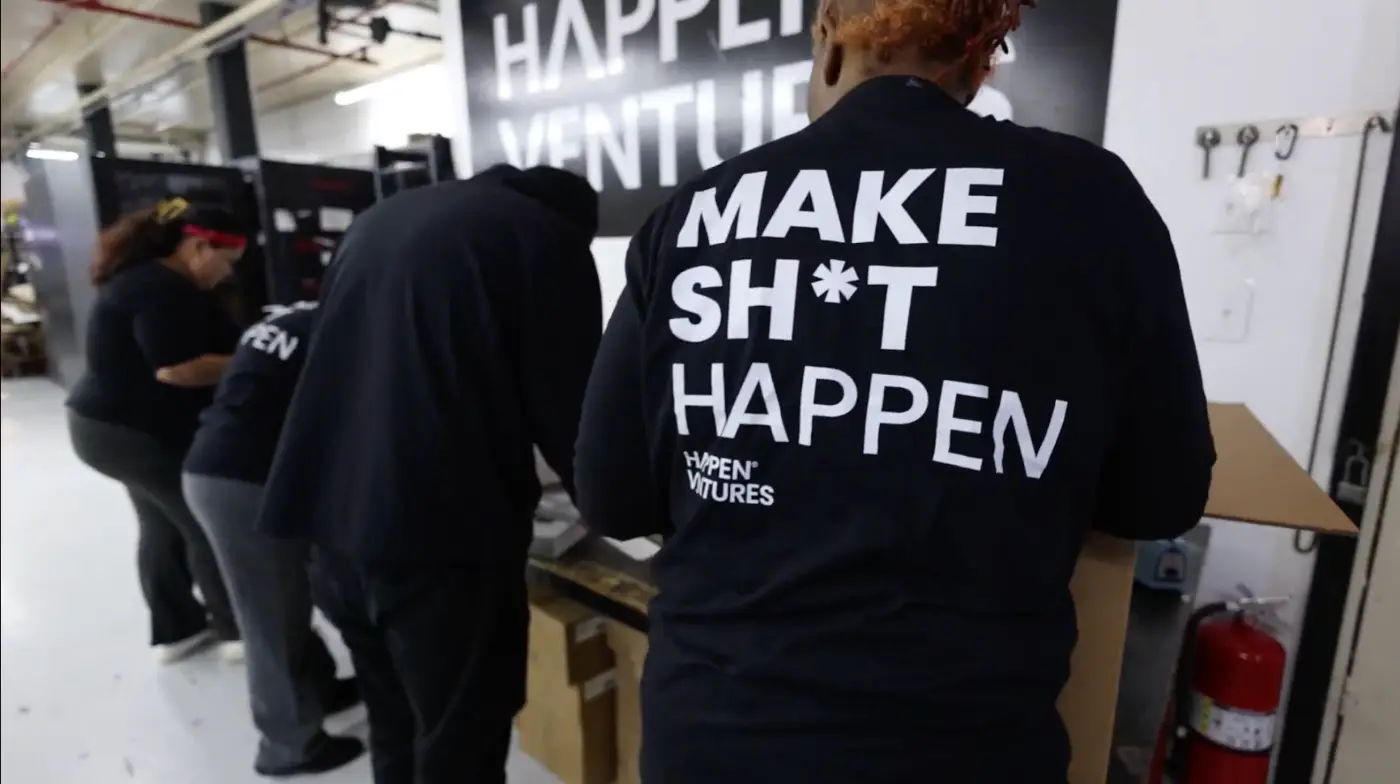
10. Happen Ventures
At the end of our list, we left a company that approaches the issue of sustainability from a completely different angle. Happen Ventures stands out because they have focused on the critical, but often ignored, problem of illiquid (hard-to-sell) inventory. Thanks to their mastery of reverse logistics, they help businesses turn what was once considered waste into something valuable and useful.
While other giants optimize direct deliveries, Happen Ventures closes the most difficult part of the cycle – working with returns, surpluses, and near-expiry goods. Instead of sending these items to the landfill, they find new uses for them, giving them to those in need or sending them for recycling. This approach makes them an indispensable element of the global ecosystem, because sustainability is proven in the hardest part of the loop, returns, surplus, and end-of-life handling.

